
Fight fraud
Confronting the many faces of ecommerce fraud
What are the challenges in fighting ecommerce fraud? For one, it keeps changing as fraudsters continue to adapt. And with the ever-increasing spectrum of friendly fraud and false claims – from confused customers to cases of buyer's remorse to misuse of the chargeback process – it's getting more complicated and costly to address. At the heart of the problem is a fundamental lack of communication between card issuers and merchants and a broken chargeback process that was never designed for sharing actionable intelligence. The result is that card issuers and merchants are suffering significant losses that are completely avoidable!
How Ethoca fights CNP and friendly fraud
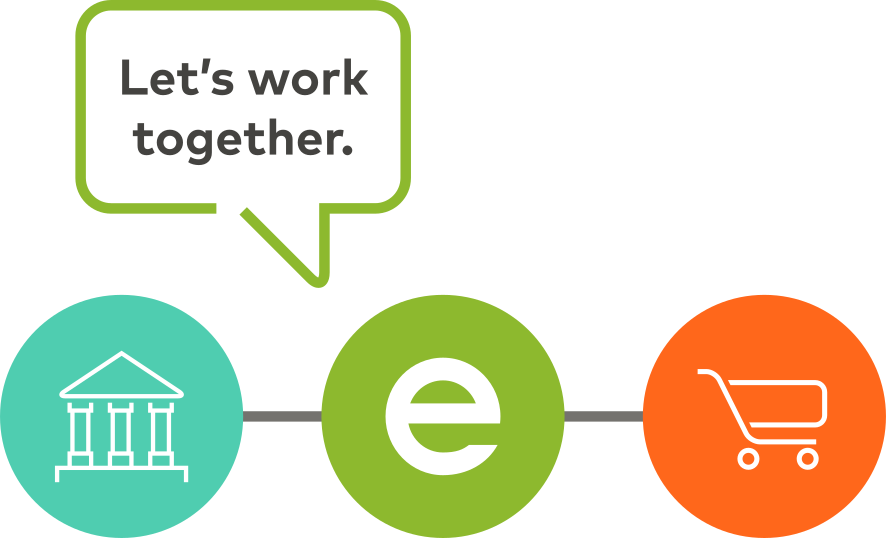
In a word? Collaboration. We've taken the broken chargeback process and, step by step, replaced it with something much more effective for ecommerce fraud protection. Our global collaboration network connects merchants and card issuers to share intelligence at every stage of the fraud loss prevention and recovery process.
Notification of issuer-confirmed fraud - that takes weeks through the chargeback process - now takes just hours or minutes through Ethoca’s network. With our collaboration-based services, we make it possible for issuers and merchants to recover losses and reduce operating expenses. That means more time to focus on what really matters: customer experience and accepting every good transaction. And we can help you with those, too!
Helping prevent CNP fraud and unnecessary chargebacks

Ethoca Consumer Clarity™
Eliminate chargebacks and recover revenue lost to 'friendly fraud' and customer disputes.

Ethoca Alerts
Reduce CNP fraud and prevent chargebacks through merchant-issuer collaboration.

Ethoca case study: Merchant fraud protection
Priding themselves on fast order fulfillment, this home improvement retailer had a short time-window between order placement and shipping. The challenge was to stop high-value goods from being shipped out before an order was identified as fraudulent. Download our case study to learn how they leveraged near-real-time alerts to prevent chargebacks.